Conway's Game of Life for the Atari® 2600
BORN ON 3.
SURVIVES ON 2 OR 3.
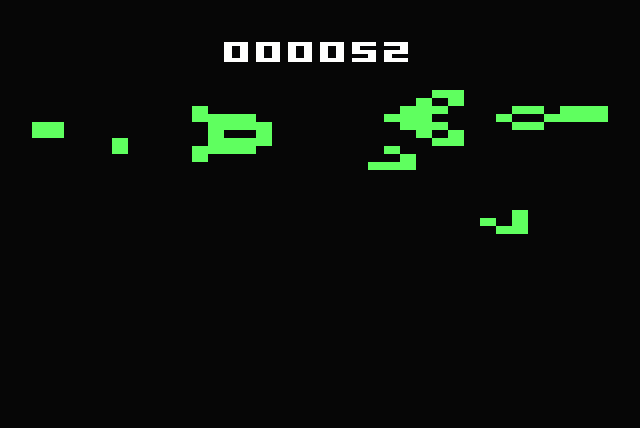
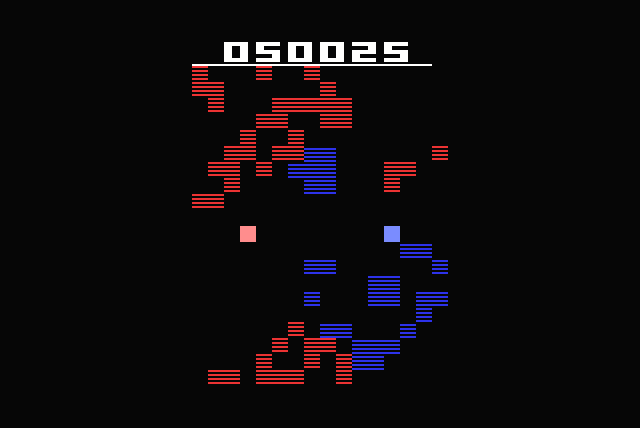
Life on a console from 1977: a fine grid of 7,680 cells, a fast grid of big ones, and a duel for two players. The cartridge has no processor of its own. The console does all of it.
Version 1.1, release candidate 1 16K cartridge, 2K of RAM NTSC 1 or 2 players
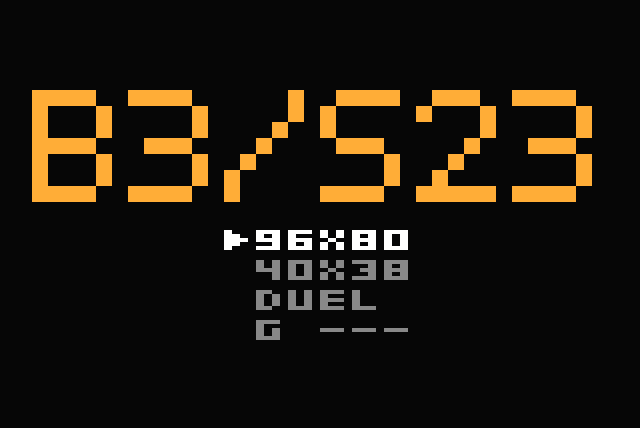
The title. Left alone, the name comes alive.
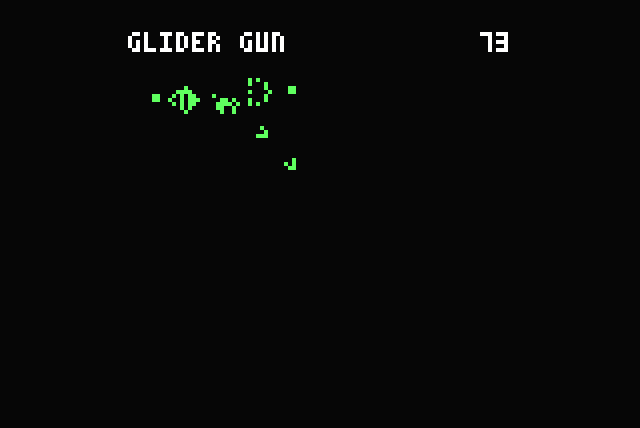
Press POWER ON, then use the arrow keys and Space. Push down to choose a game and Space to start it. In a game, R runs and pauses. The emulator is Stellerator, by Christian Speckner. The manual has every control.
LIFE
7,680 cells, each a single pixel. Nine patterns to start from, or draw your own with a one-pixel cursor. It flickers, as the first Life cartridge did in 1981.
LIFE
1,520 big cells across the whole screen. No flicker, and six generations a second whatever is on the grid.
ONE OR TWO PLAYERS
Red v Blue. Both colours live by the same rule, and a newborn cell takes the colour of most of its parents. Place ten cells each, drop more as it runs, and count up at the end. With one player, the console takes the other colour.
ON THE MENU
A setting for how many generations a game runs: no limit, 100, 200, 500 or 1,000. Life pauses there. A duel ends there.
It is the whole rule of the game, written the way the people who study it write it. Every cell has eight neighbours. Count the live ones.
John Conway devised it in 1970. From those two lines come shapes that sit still, shapes that blink, shapes that walk, and a gun that fires walkers for ever. Change either number and you get a different world, and nearly all of them are duller.
The scripts that measured those are in the repository beside the numbers. So are the plain 4K cartridges this one grew from, and a history of Life on the 2600 since 1981.